
The Little Fitting That Holds Your Whole Air System Together
There is something about the small brass fittings in your workshop that nobody talks about until the day you need one and you do not have it. I am talking about the Brass Air Hose End and honestly, this little piece of hardware has saved me more times than I can count. You are out there trying to hook up your air compressor to a tire inflator or a spray gun and the end of your hose is either stripped or the wrong size and suddenly a ten-minute job turns into a frustrating trip to the hardware store with your tools half connected and air hissing out everywhere.
This Forney fitting is a 1/4 inch male NPT on one side and a 3/8 inch barb on the other. That is it. That is the whole thing. But that simple connection is what keeps your air system from leaking pressure and making your tools feel weak and underpowered. The brass construction is not just for looks either. Brass does not rust the way steel does and in a garage where things get damp and you are storing stuff under the floor and the humidity comes in through the door, this matters a lot. I have seen steel fittings turn into orange sludge within a single year and this brass one just sits there looking fine even after months of sitting in a bin.

The barb end grips your air hose when you slide it on and then you clamp it down with a hose clamp or a ferrule. No fancy tools needed. You thread the MNPT side onto your compressor port and you are done. The whole install takes maybe thirty seconds if you have the hose clamps on hand and I always do because I keep a handful of these in a little bin on my workbench. They are six ninety nine dollars each and I would rather have three spares than be stuck without one on a Saturday morning when I need to inflate the tires before a road trip.
WHY I KEEP COMING BACK TO THIS ONE IS BECAUSE IT JUST WORKS. Every single time. You do not have to wonder if it is going to hold pressure. You do not have to check for leaks after you hook things up and listen for that annoying hissing sound. The brass is solid and the threading is clean and the barb grips the hose like it is supposed to. For the price of a sandwich, this is the most reliable little connection you can make in your pneumatic setup and I cannot stress that enough.
Whether you are running a paint sprayer or inflating the tires on your truck or powering an impact wrench or using an airbrush for a hobby project, this fitting is the link between your compressor and whatever tool you are using. It is the unsung hero of the air system. Nobody gives it a second thought until it is missing or broken and then suddenly it is the most important thing in the entire garage. I have had friends call me at weird hours because their air hose end cracked and they could not figure out what to do and the answer was always the same. Grab a new one and thread it on. Done.
Why Brass Beats Steel in the Garage
I want to go a little deeper on the material because people sometimes grab a cheaper steel fitting and wonder why it is already corroded after six months. Brass is naturally resistant to corrosion and it does not need a coating or a finish to protect it. The metal itself does the job. In a workshop environment where you might have moisture in the air or where a hose gets kinked and water gets trapped in the fitting, brass just handles it. Steel needs to be galvanized or coated and once that coating chips off, the rust starts eating through it and you are left with a fitting that will not seal properly anymore.
The 1/4 inch MNPT threading is the standard size you will find on most air compressor outlets and on a lot of pneumatic tool ports. That means you do not have to hunt around for adapters or worry about compatibility. You thread it on and it fits. The 3/8 inch barb is the size that matches most standard air hoses you will find at any hardware store. If you are running a smaller hose, you might need a different barb size, but for the typical 3/8 inch hose that comes with most home compressors, this is the one to grab.
One thing I always tell people is to use a proper hose clamp and not just rely on the barb to hold the hose in place. The barb helps, but under pressure the hose can work its way off if it is not clamped. A small stainless steel hose clamp costs a few dollars and it makes the connection completely secure. I keep a box of them next to my fittings and I use one every single time. It takes ten seconds and it saves you from a slow leak that drains your compressor tank while you are trying to use a tool.
The Tarp That Does Everything
Now let me talk about something that is not even in the same category, but I keep reaching for it more than I would like to admit. The Drawstring Tarp is a 9 by 9 foot piece of 7 mil nylon with rope edges and openings at all four corners. It is black and it is not the prettiest thing in the world, but it is the first thing I grab when the forecast says rain and I have a project going on the driveway or the patio.
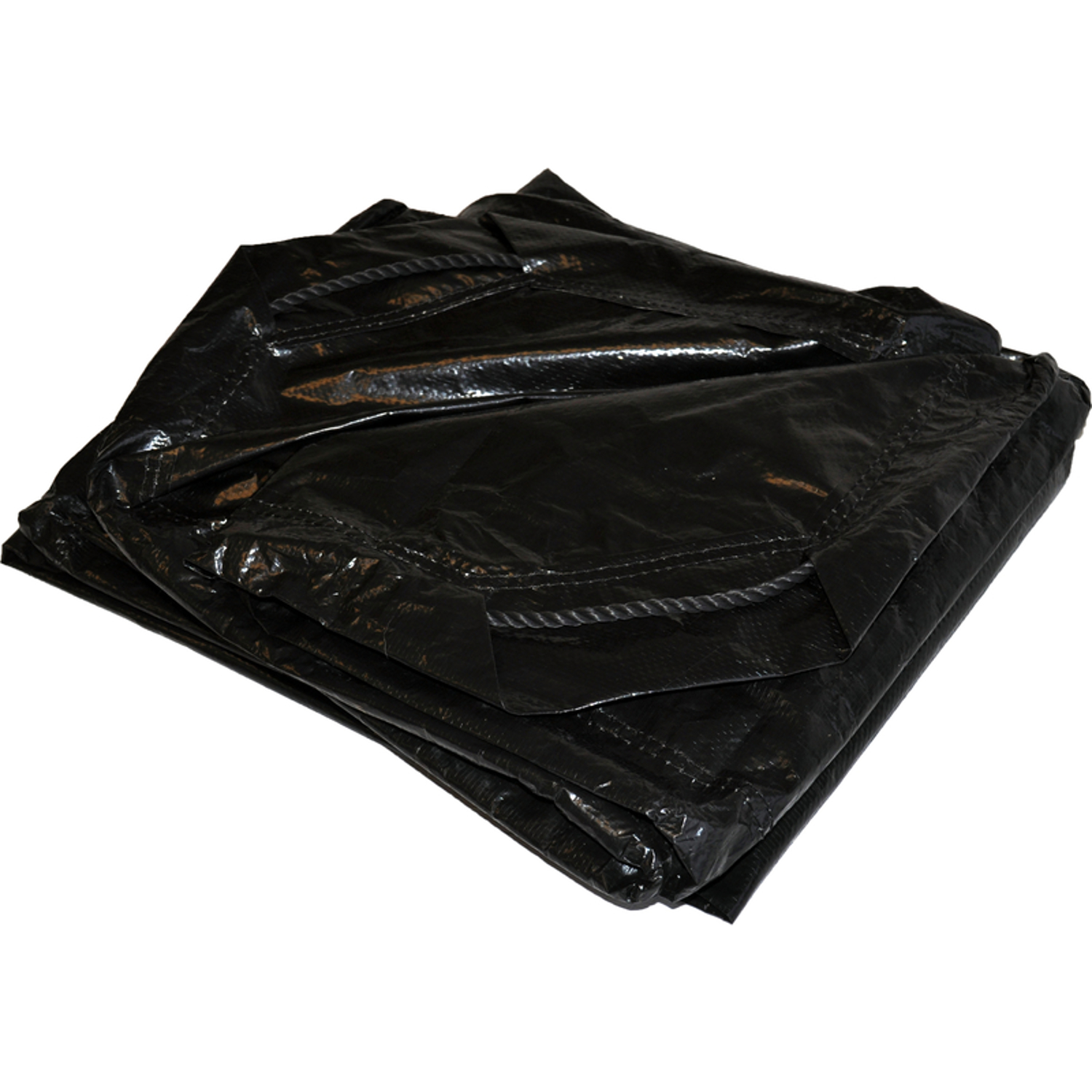
I use this tarp for so many different things that I have stopped counting. I throw it over the grill when we are not using it so the rain does not turn the cooking grate into a rust factory. I drape it over a sandbox in the backyard so the kids can still play in it even when it is wet. I lay it down under a car when I am working on the underside so I do not get oil on the concrete. I use it to cover a pile of lumber when I am storing it outside for a weekend project. The drawstring edges are the best part because you can cinch it tight around whatever you are covering and it does not just blow off in a gust of wind like a flat sheet of plastic would.
The UV blocking is a nice bonus too. If you leave a tarp over something for a few weeks, the sun is going to cook whatever is underneath if the material does not block those rays. This one handles it well and the 7 mil thickness is not the thickest you can get, but for the price of twenty-five dollars it is more than enough for what I use it for. I have had this one for over a year of regular use and it still holds up. No tears. No holes. The rope edges are still intact and the drawstrings still cinch tight. For the money, it is a workhorse.
The 9 by 9 foot size is just right for a lot of things. It is big enough to cover a standard grill or a small table or a section of driveway, but it is not so big that you are wrestling with a giant sheet of material trying to get it positioned. You throw it over the thing and pull the strings and you are done. The corner openings let you tie it down to a post or a fence if you need to secure it for a longer period. I have used it to create a little shade area for a dog during a really hot afternoon and it worked perfectly for that too.
Kennel Clamps That Actually Hold
If you have a dog or a rabbit or any animal that lives in a run or a kennel, you know that the panels are only as good as the connections between them. The Panel Clamps from YardGard are galvanized steel and they fit standard 1 3/8 inch panels. That is the exact size, so there is no fumbling with the wrong hardware trying to make it work. You line up the panel and you tighten the clamp and it is locked in place.
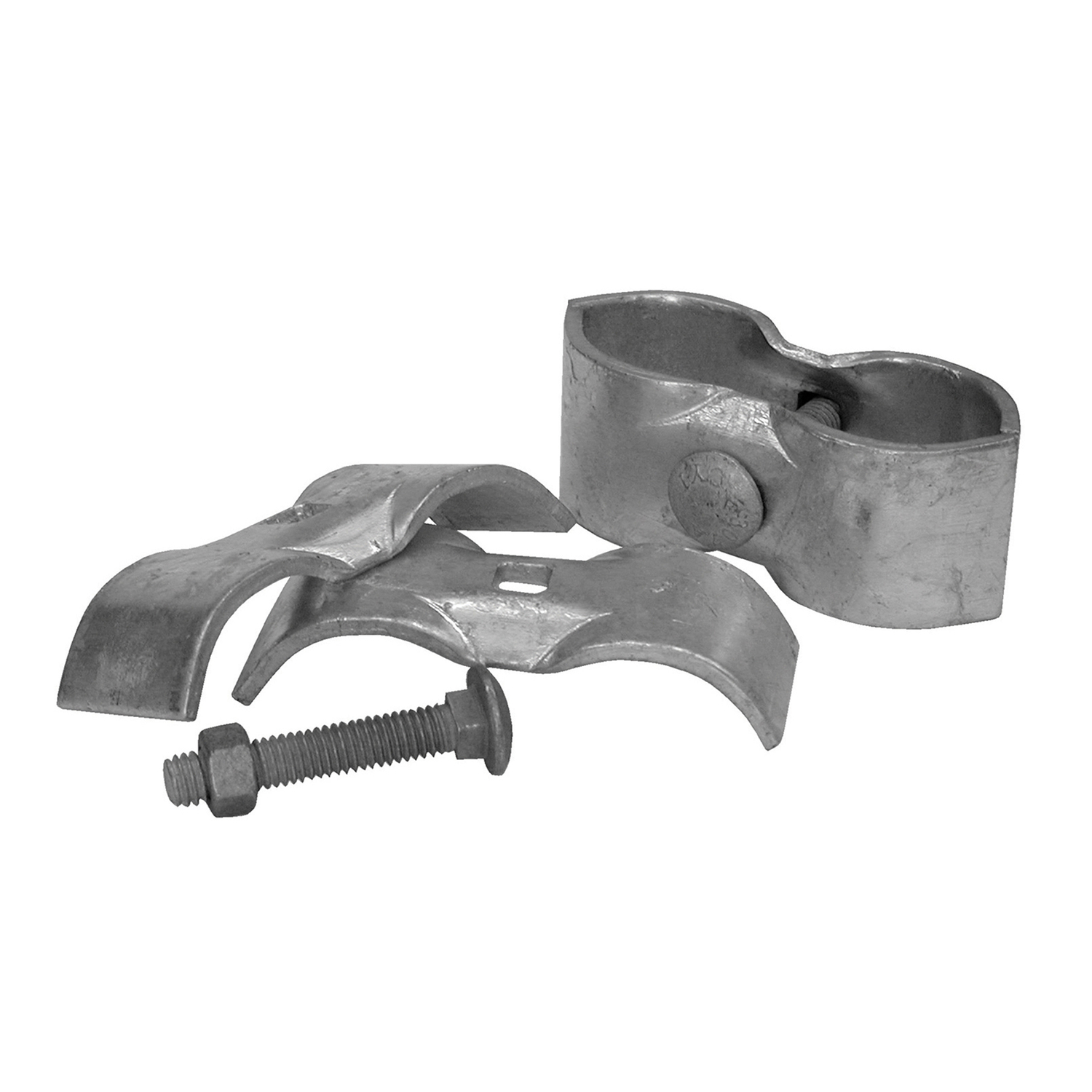
The screw-type design means you do not need a wrench or a drill or any special tool at all. You just tighten them by hand and they lock tight. No wobble. No panels shifting when your dog leans on them or when the wind pushes against the run. The galvanized finish means they will not rust out in a season of rain and that is huge if you are in an area where the weather is not exactly gentle on outdoor hardware. I live in a part of New York where the humidity in the summer and the freeze thaw cycles in the winter will destroy unprotected steel in a couple of years. These clamps are built to handle that.
I have a friend who runs a small kennel setup in her backyard and she went through a whole set of these when she expanded the run to give her two dogs more space. She told me she could have the whole thing reconfigured in under twenty minutes because the clamps just screw on and off. No cutting. No welding. No calling a contractor. Just tighten the clamp and the panel is locked in place. She moved the whole run to a different part of the yard in one afternoon and that would have been a multi-day project with welded connections.
The fact that they are interchangeable is another big deal. If you need to add a panel or remove one or change the configuration for the season, you just unscrew the clamps and rearrange. No permanent modifications. No damage to the panels. You can keep your kennel setup flexible as your needs change. Maybe you need a bigger run in the summer and a smaller one in the winter. These clamps make that possible without any extra hardware or tools.
The Smoke Alarm You Should Not Skip
Okay, this one is a different animal entirely, but I am putting it in here because it is a small item that you should not skip and a lot of people do. The Smoke Alarm from First Alert is a battery-operated photoelectric detector and it does not need to be hardwired into your electrical system. You mount it on the wall or ceiling and it just works. No electrician. No cutting into drywall. No pulling permits. You stick it up with the included mounting hardware and press the test button to make sure it is alive. Done.
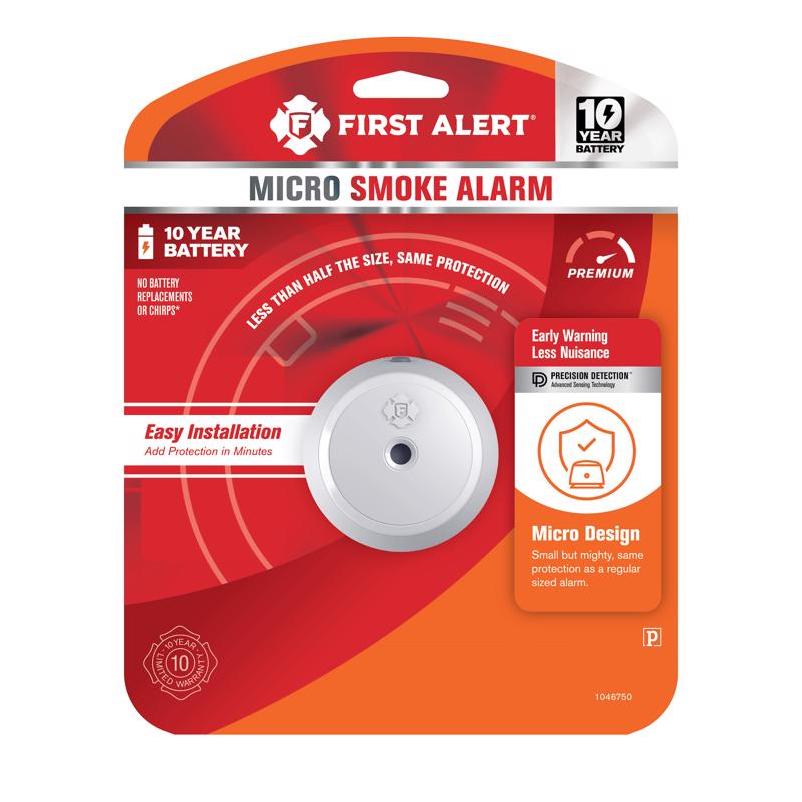
The photoelectric sensor is the key thing here and it is worth understanding why it matters. It is specifically designed to catch slow-burning smoldering fires, which is the kind of fire that produces a lot of visible smoke before it gets really bad. Ionization detectors are better for fast flaming fires but if you are cooking something on the stove and it starts to smolder, or if there is a slow electrical fire in the wall, or if a candle gets too close to a curtain, the photoelectric type is going to catch it sooner. That early warning is what gives you time to get out and call the fire department before the whole thing gets out of hand.
The fact that it runs on a battery means it keeps working during a power outage. And that is exactly when you need it. A power outage can be caused by a fire in the electrical system and if your smoke alarm is hardwired and the power is out, you have no alarm at all. This one does not care if the power is on or off. As long as the battery is in there, it is watching. The built-in test and reset button lets you verify functionality with a single press and silence the alarm for convenient maintenance. I press the test button every six months and I hear that little chirp and I feel a small sense of relief. Forty-seven dollars for a device that could save your entire house and everything in it. I do not think about it much until that test button moment and then I am glad I have it.
The compact design is another plus. It does not take up much space on the wall or ceiling and it does not look like a big ugly box. You can put it in a hallway or a bedroom or a kitchen and it just blends in. For an apartment or a rental where you cannot modify the electrical wiring, this is the way to go. You mount it and you are protected. When you move out you take it with you and mount it in the new place. No damage to the walls beyond a couple of small screw holes.
Why Small Hardware Matters More Than You Think
These four items cost less than a hundred dollars combined and they all solve a specific problem that would be a real pain to deal with if you did not have the right piece of hardware on hand. The air hose end keeps your pneumatic tools running at full pressure. The tarp keeps your stuff dry and protected from the sun. The kennel clamps keep your animal safe and your enclosure stable. The smoke alarm keeps your family safe when you are sleeping and the house is dark.
I picked all of these up at Waddington Hardware and honestly the trip was worth it just to have them in the garage. You do not need a big project to justify buying a six-dollar brass fitting or a twenty-five-dollar tarp. You just need to know that when the moment comes, you are not standing in the driveway with a stripped hose end and no way to finish the job. You are not watching your grill rust out because you forgot to cover it. You are not wondering if your dog is going to push through a loose panel. You are not sleeping in a house with no working smoke alarm.
That is the whole point of keeping a well-stocked hardware bin. You are not buying these things for the fun of it. You are buying them so that the next time something goes wrong, you are not the person driving to the store at 6 am because you need one specific fitting to finish a job. You are the person who opens the drawer and grabs it and gets back to work. The garage is not just a place to park the car. It is a workshop and a storage space and a project area and the small items in the hardware bin are what make all of that possible. Keep them stocked. Keep them organized. And the next time you need one, you will not have to go looking for it.
